
Research
Quick Facts
external research awards (FY2024)
tenured/tenure-track faculty
research centers and institutes (leading or affiliated with)
Research Strengths
Our research strengths encompass the full gamut of cutting-edge ECE technologies: embedded systems and internet-of-things, robotics and cyber-human systems, networking (mobile/wireless as well as the Internet of the future), big data analytics and machine learning. Northeastern’s historic strengths in ECE include communications and digital signal processing, power and control systems, power electronics, RF/microwave magnetic materials, device technologies, and computer engineering.
Biomedical Research and Collaborations
Northeastern ECE faculty are engaged in a range of biomedical projects in collaboration with fellow world-class researchers in the Boston-area medical community. These projects span all disciplinary areas and include MEMS/NEMS sensors for biological detection; applications of wireless technology in biomedical implants; biomedical imaging hardware and signal processing; brain-computer interface technologies; disease detection and tracking; and many more.
Recent News
Sturdier Motion Sensors Built to Survive Shock and Vibration
Research conducted by ECE Associate Professor Cristian Cassella, Assistant Professor Benyamin Davaji, Professor Matteo Rinaldi, and ECE/MIE Professor David Horsley titled “Toward Enhanced Inertial Sensing via Dynamically Soft Topological States in Piezoelectric Microacoustic Metamaterials” was published in Advanced Functional Materials.

Innovative Magnonic Resonator Design Advances Compact and Energy-Efficient Microwave Signal Platforms
ECE Assistant Professor Xufeng Zhang’s research on “Generation of ultra-broadband frequency comb in strongly bistable nonlinear magnonic resonator” was published in Nature Communications.
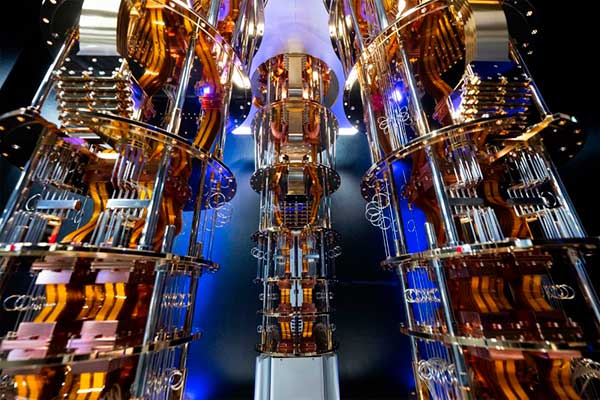
Improving Quantum Computing Reliability and Scalability Through Modular Error Correction
ECE Associate Professor Hessam Mahdavifar and COS/ECE Assistant Professor Ivana Dimitrova were awarded a DOE grant for “Hierarchically Coupled Quantum LDPC Codes for Modular Quantum Computing.”
Understanding What Causes Autonomous AI Systems to Misbehave
ECE Assistant Professor Lili Su explains that recent incidents of autonomous AI systems acting out of bounds stem from training gaps and human configuration errors rather than malicious intent.